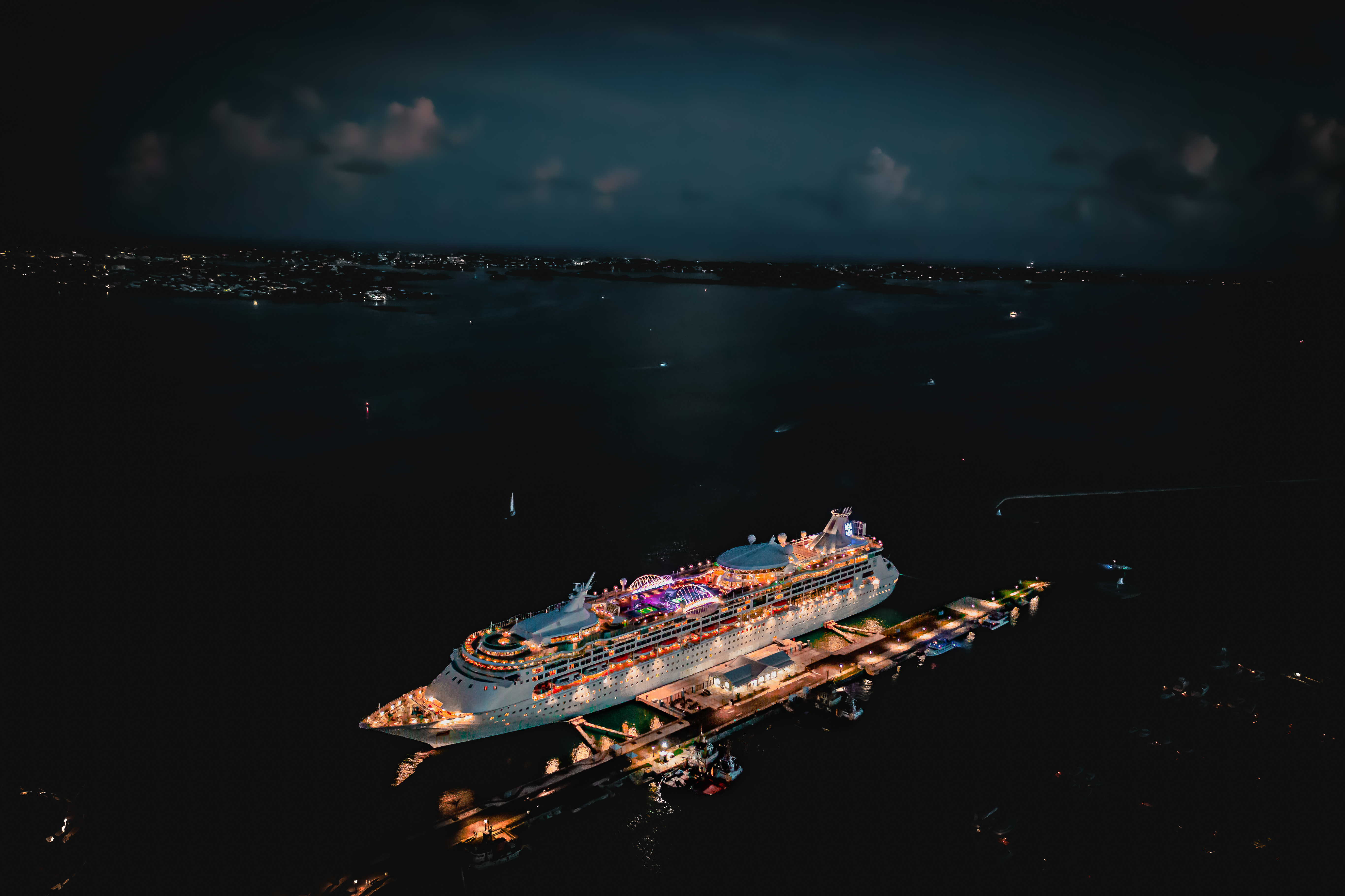
Luxury tourism in Egypt is a two-tier market. Large international operators with sophisticated digital presences compete in one tier. Independent operators without professional websites, online booking, or any digital infrastructure compete in another. The gap between the two tiers is not small. It is structural. Until recently, one Luxor-based cruise operator sat in that second tier, invisible to the market, losing business to competitors and the infrastructure that held them captive. Within 90 days of engaging TechSparq MENA, that operator had moved completely.
This case study is not about incremental improvement. It is not about website redesign, or optimization of an existing platform, or a marginal lift to conversion. It is about the transformation that happens when a tourism operator moves from a pre-digital operational state to a fully integrated digital business. The metrics tell the story, but the story itself is about what becomes possible once the infrastructure exists. 240 percent increase in website traffic. 60 percent growth in revenue. 35 percent reduction in operational costs. 40 percent increase in direct bookings. These are not the outputs of better marketing. They are the outputs of an operation that could finally market itself.
The invisible problem. What happens when digital infrastructure doesn't exist.
This operator had been running for years on muscle memory and spreadsheets. No professional website. No online booking capability. No payment processing. No CRM. No workflow automation. No centralized data structure. No analytics. Customers could not find them online. If they did, they could not book. If they wanted to book, there was no clear path. Pricing was managed in Excel. Contracts and financial records lived across multiple documents and email threads. Accounting required manual reconciliation. Revenue reports took weeks to compile. Employee onboarding meant teaching someone the entire broken system by rote.
The operator understood that they had a problem. What they did not understand was the full cost of not solving it. Every month, they lost bookings to larger competitors with functional websites. Every inquiry that arrived came with friction, manual processing, and high likelihood of error. Staff spent operational time on tasks that automation could handle. Revenue potential went uncaptured. The business was profitable, but it was trapped in a ceiling imposed by infrastructure.
Most importantly, they were invisible. Egypt's tourism market is global. Travelers planning Nile cruises do not start with local searches. They start with Booking.com, TripAdvisor, and Google. This operator was not on any of those platforms to a degree that mattered. They were known in person, through networks, through word of mouth. That is a powerful distribution channel for some businesses. For a tourism operator competing against platforms that aggregate thousands of properties, it is a liability.
What the audit revealed. The specific architecture that had to be built.
The TechSparq MENA team conducted a full operational audit. The findings were clear, and they were comprehensive. The business had no customer relationship management system, which meant customer data was fragmented. There was no source of truth for bookings, payments, or occupancy. Marketing efforts had no infrastructure to capture or analyze traffic. There was no integration between booking and payment, which meant confirmed reservations still required manual processing on the back end. Financial records and contracts were not machine-readable, which meant accounting and legal review were both time-intensive and error-prone.
The specific cost came into focus quickly. On average, a booking took 45 minutes to process manually. A significant percentage of inquiries never converted because the friction was too high. Pricing errors happened regularly because rates were maintained in multiple locations. The operator was leaving 40 percent of potential direct bookings on the table, instead competing through OTA channels and paying commission rates that made those bookings barely profitable. Three team members spent the equivalent of one full-time person on administrative work that automation could handle in seconds.
Manual booking processing required 45 minutes per reservation. Pricing was maintained across four separate spreadsheets, creating conflicts and errors. 60 percent of inquiries came through email with no conversion tracking. Financial reconciliation took 10 hours per month. Customers had no visibility into availability or real-time confirmation.
The architecture we built. From invisible to digitally native in 90 days.
The TechSparq MENA build was comprehensive and pragmatic. We designed and deployed a custom SEO-optimized tourism website that positioned the operator as a professional player in Egypt's cruise market. The website was not just presentational. It was built to function as a lead generation and conversion engine, with high-intent copywriting, professional photography and videography integration, and clear booking calls to action.
The second component was a secure online booking engine integrated with real-time payment processing. Customers could now see availability, select dates, enter passenger information, and complete payment without a single email exchange. The booking engine fed directly into the CRM and workflow system, which meant confirmed reservations automatically triggered operational workflows, generated contracts, and initiated customer communication sequences. This eliminated the 45-minute manual processing step entirely.
We built a complete CRM and workflow automation system that centralized all customer data and automated repetitive operational tasks. Contract generation became instantaneous. Payment confirmation happened in real-time. Automatic customer communications triggered at key moments, reducing the need for manual email management. Pricing was managed in a single source of truth, with rules and logic that prevented conflicts and pricing errors. Financial records and customer contracts were now structured and queryable, which meant accounting and legal review happened in minutes instead of hours.
The infrastructure also included real-time analytics dashboards that gave the operator visibility into traffic sources, conversion rates, booking pipeline, and revenue by channel. The data that had taken weeks to compile in spreadsheets was now available on demand. This did not just provide reporting capability. It provided decision-making capability. The operator could see in real-time which marketing efforts were working, which customer segments were highest-value, and which operational issues were impacting conversion.
The final component was structured training and an internal learning academy that ensured the team could operate and maintain the systems independently. This was not a hand-off. This was a transfer of capability. By the end of 90 days, the operator's team was not just trained on the systems. They understood the operational philosophy behind them.
90 days to transformation. The metrics that prove infrastructure matters.
Three months after launch, the numbers were unambiguous. Website traffic increased 240 percent. This is not a marginal improvement to marketing effectiveness. This is what happens when a business becomes visible in the market. The operator is now indexing for relevant search terms. Customers looking for Nile cruises are finding them on Google. That did not happen because marketing campaigns improved. It happened because the infrastructure that Google indexes existed for the first time.
Revenue grew 60 percent in those same three months. In a tourism business, that kind of growth does not happen from price increases. It happens from volume. The operator was converting inquiries at higher rates and capturing bookings that were previously lost to friction. More importantly, they were capturing bookings directly instead of channeling them through OTA platforms that took 15-20 percent commission. The revenue number understates the impact to margins.
Operational costs fell 35 percent. Three team members stopped spending hours on manual processing. Administrative work that had consumed a person-year of effort was now automated. The savings were real and immediate. At the same time, the business scaled. They were handling more bookings with fewer people, not because staff worked harder, but because infrastructure worked instead of people.
Direct bookings increased 40 percent. This is the most strategically important metric. An operator that relies on OTA platforms is not building a business. They are building a customer base for someone else. Direct bookings are the foundation of customer lifetime value, brand loyalty, and pricing power. This operator had been losing those advantages to commission structures and algorithmic ranking. Now they were capturing them.
Website traffic up 240 percent. Revenue up 60 percent. Operational costs down 35 percent. Direct bookings up 40 percent. Average booking processing time from 45 minutes to 3 minutes. Customer data now centralized and searchable. Pricing maintained in single source of truth. Financial reconciliation from 10 hours per month to 30 minutes.
Why tourism operators lose to OTA platforms. The structural argument about direct bookings versus aggregation.
Booking.com, Expedia, and Airbnb are not travel companies. They are software and logistics companies that happen to sell travel. They have effectively infinite inventory (because the inventory lives on other people's platforms), sophisticated search and discovery algorithms, payment processing at global scale, and customer reviews and verification systems that overcome the trust gap between unknown operator and unknown customer. They can offer that customer a hotel with verified reviews, instant booking confirmation, protected payment, and a support organization. A small cruise operator on their own cannot.
The operators on those platforms are not competing with each other. They are competing against the platform itself. Booking.com takes 15-20 percent commission because they own the customer relationship, the payment flow, and the trust infrastructure. The operator is reduced to a profile on someone else's platform. They have no way to differentiate beyond price, and price competition on an aggregation platform is brutal.
Direct bookings change that equation. A tourism operator with a professional website, secure booking, and customer data becomes a peer to those platforms, not a supplier. They can build relationships with customers, access customer email and behavior data, offer loyalty and repeat-booking incentives, and capture full margin on every transaction. The customer that books directly might book again. The customer that books through an OTA is sold to the platform, not to the operator.
This is not theoretical. Every tourism market in the MENA region has small operators that understand their niche deeply but lose business to aggregation platforms because they cannot compete structurally. The operators that win are the ones that build the infrastructure for direct bookings. The rest are margin-eroded suppliers to platforms that control their customers.
A regional model for digital transformation. What TechSparq MENA learned from building this operation.
Tourism operators across the Middle East and North Africa face the same structural challenge. They operate in a global market but often lack the digital infrastructure to compete in it. They know their market deeply. They understand customer service. They understand the nuances of luxury travel in the region. But they are competing against global platforms on infrastructure, and infrastructure is not something you can overcome with better service or lower prices.
The TechSparq MENA approach is to build that infrastructure systematically. Website that ranks and converts. Booking engine that reduces friction. CRM that centralizes customer knowledge. Automation that eliminates manual work. Analytics that enable real-time decision-making. Training that transfers capability to the operator's team. This is not a template. Every operator has different requirements. But the philosophy is consistent. The infrastructure has to be built first, with quality and intention. Once it exists, marketing becomes dramatically more effective and margins become dramatically healthier.
The Luxor operator's transformation proved the model works. The specific metrics and timeline may not apply to every operator, but the principle does. Tourism operators that build their digital infrastructure as a strategic priority, not an afterthought, compete differently. They acquire customers at lower cost, convert at higher rates, retain at higher frequency, and capture higher margins. They are no longer suppliers to platforms. They are platforms themselves.
Tourism operator competing
against OTA platforms? Let's build infrastructure.
TechSparq MENA helps hospitality and tourism operators build digital infrastructure for direct bookings. Website, booking engine, CRM, automation, analytics, and training. Everything required to compete in a global market and own your customer relationships.
Book a Consultation